The conflict in Ukraine has led to a massive rise in the use of landmines and other explosive ordnance, putting the population at high risk. The devastating consequences are likely to last long after the conflict has ended.
Why we work in Ukraine
Even before the full-scale invasion commenced in 2022, Ukraine was already a heavily contaminated country due to the legacies of World War I, II and the 2014 war in Eastern Ukraine. The past few years have led to an unprecedented crisis and an urgent need to address this ongoing threat.
MAG's operations in Ukraine began in early 2022, at the start of the invasion, when a small team conducted an initial assessment to identify crisis response needs and opened an office in Kyiv, gaining official registration in August 2022. Working in partnership with the Ukrainian authorities and other humanitarian agencies, the team documented evidence of widespread contamination resulting from the use of cluster munitions, artillery and mortar shells, rockets and missiles, aerial bombs, anti-vehicle and anti-personnel mines, grenades and other explosive ordnance.
According to the Fifth Rapid Damage and Needs Assessment (RDNA5), total recovery and reconstruction needs for explosive hazards management are estimated at 20,5 billion pounds for the 10-year period 2026–2035. As of early 2026, Ukraine still has over 132,000 square kilometers of potentially contaminated land.
How we help
In February 2024, MAG teams started demining operations in Mykolaiv region and established an operational base in Balakliia. Since early 2025, clearance has also been ongoing in the Kharkiv region. MAG continues to scale up its mechanical clearance capacity through the deployment of key assets, including two MineWolf machines currently operational in the field. Planned additions in 2026 — a Digger D-250, a PT300 and two Ukrainian-made Zmiy machines — will further expand our reach and increase productivity across complex contaminated areas. In November 2025, MAG began providing online EORE to residents of the de-occupied Hromada's of the Kherson region.
Since 2022, over 400 local staff have been hired to join MAG’s mission in demining Ukraine. MAG Ukraine currently has 7 Mine Action Teams, 10 Multi Task Teams, 14 Community Liaison teams, one Mechanical team and one Mechanical Support Team.
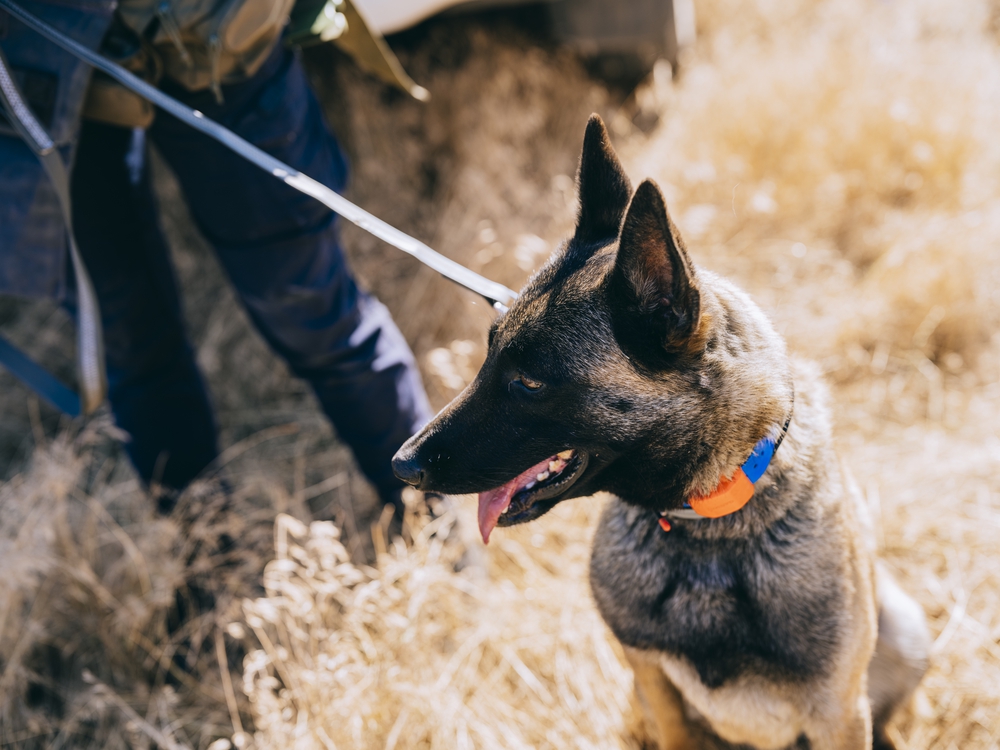
MAG partners with APOPO, a Belgian non-governmental organisation that deploys highly trained Technical Survey Dogs (TSD) to detect landmines. TSD teams were first deployed in the spring of 2025.
MAG is also working with the Ukrainian Deminers Association (UDA) to build its capacity through training in all aspects of demining from risk education work to mechanical clearance.
Explosive ordnance risk education and Conflict preparedness and protection sessions are being conducted through digital and traditional media channels, including radio messages and billboards, as well as face-to-face engagement. These sessions allow communities to learn how to recognise the areas which might be contaminated by explosive devices and to sound the alarm. They also support people to learn safe behaviours in case they come across dangerous items.
Our results in 2025 (Jan-Aug)

People directly supported
96,000+

Area Surveyed by TSD
2 mil sqm+

Land cleared
2.5 mil sqm+

Risk education sessions
15,904

Explosive ordnance found and reported
212